Built by Many: Art as a Common Thread - 2027/28
Inspired by Weil’s work with building creative districts, Built by Many is a large-scale painting and installation project exploring how artists transform historically layered urban neighborhoods into thriving cultural ecosystems. Through an immersive chapter-based exhibition, the work examines the power, pressures, and creative freedom of artistic energy and labor, and its lasting imprint on communities.
Think graphic novel meets a spatial narrative exhibition.
This new project is in the early stages and is slated to be completed in 2027-28. Weil is seeking grant funding as well as final exhibition spaces. Built by Many is envisioned as a traveling exhibition that will move across institutions and regions, supported by artist talks, panel discussions, and community-based programming. This expanded format ensures the work remains active beyond a single venue, creating space for ongoing dialogue around creative infrastructure, cultural sustainability, and the role of artists in shaping equitable and resilient communities.
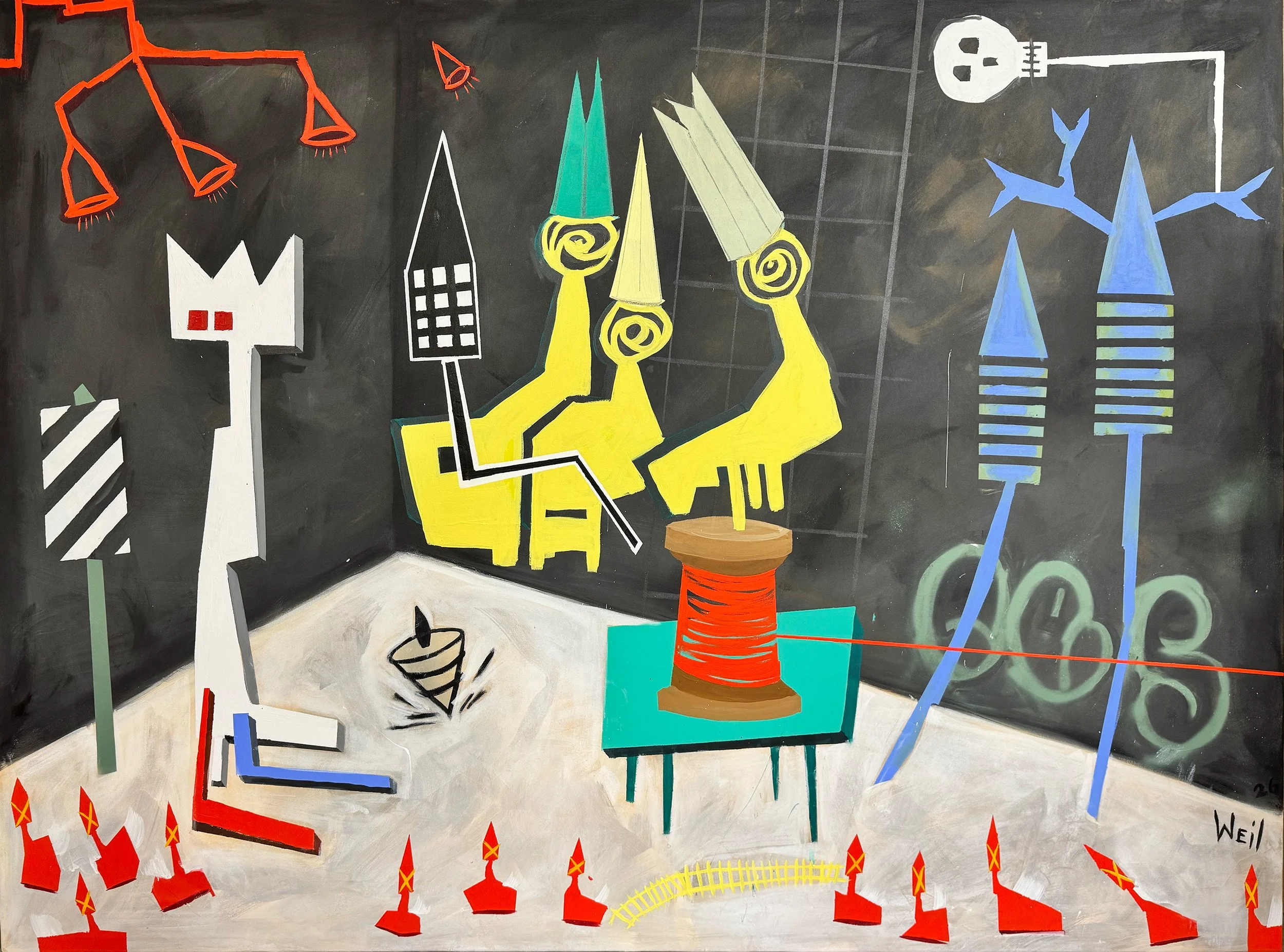
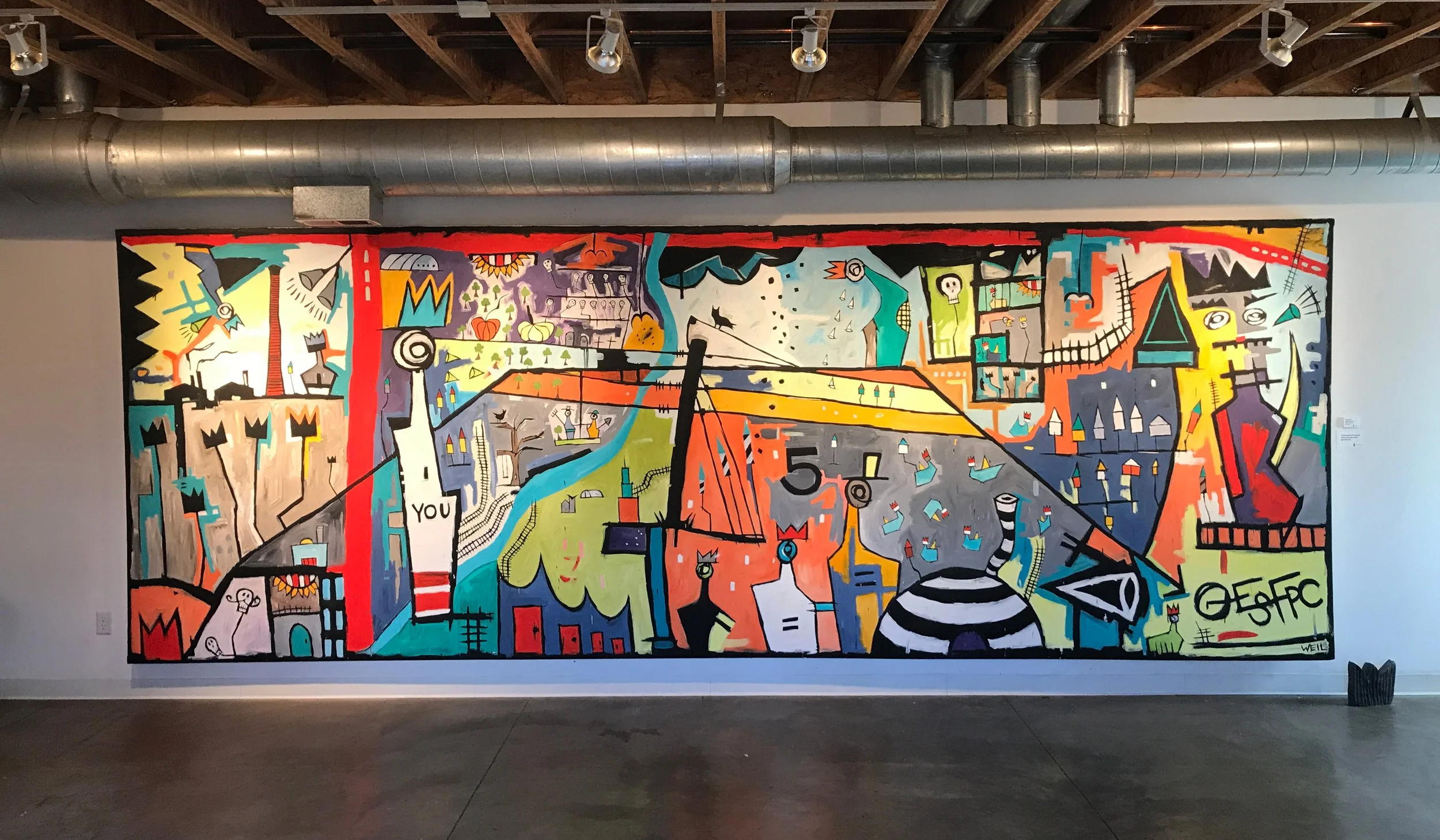
The work embraces what might be called a Guerilla Romanticism—a playful, exuberant visual language of bold color, animated line, and character-driven forms paired with the expansive emotional and social scope of Romanticism. In Built by Many, each work becomes a storytelling space where layered histories, community dynamics, creative labor, and evolving narratives converge. The paintings celebrate the imperfect, collective process of building culture from the ground up—where many voices, hands, and ideas become something larger than any one of them.
Scroll down for Chapter Descriptions as well as the extended project description. More images coming soon as they are created. This is a work in progress. Weil is looking for funding partners as well as exhibition space.
Extended Project Description
Built by Many: Art as a Common Thread is a chapter-based exhibition of large-scale paintings and spatial installations examining how artists activate historically layered urban neighborhoods and shape lasting cultural ecosystems.
Structured in eight chapters—The Empty Warehouse, The Gathering, Unified Force, In the Spotlight, The Toll, The Shift, Rooted, and The Common Thread—the exhibition traces the lifecycle of a creative district. It begins with vacant industrial spaces embedded within existing cultural and working-class histories, then moves through collective energy, creative freedom, and economic vitality before arriving at the complex realities that accompany visibility and growth.
The project centers on the idea that artists are not merely decorative contributors to cities, but catalytic forces whose creative autonomy generates social, cultural, and economic transformation. From the early graffiti and street art communities that laid the groundwork for districts like RiNo, to painters, muralists, and multidisciplinary creators, the exhibition traces how diverse artistic practices collectively shape neighborhood identity.
Through layered abstract and representational painting, recurring thread and root motifs, city-growth references, and sculptural installation elements, the exhibition visualizes creativity as connective tissue embedded within city growth and community. As the chapters progress, compositions grow denser and more luminous during In the Spotlight, reflecting earned success and cultural visibility.
This chapter marks a moment of validation: artists help build identity, attract participation, and generate economic momentum. Yet recognition introduces a central tension—the strain between public visibility and creative autonomy. Increased attention brings institutional interest, capital investment, and governance structures that reshape the creative landscape.
The Toll explores the personal and communal cost of sustaining momentum. The Shift examines evolving power dynamics without framing them as collapse. Instead, the work portrays systemic transition influenced by money, policy, and control while questioning how creative freedom can endure within changing frameworks. The penultimate chapter, Rooted, challenges the normalization of artistic displacement. Rather than romanticizing nomadism, it imagines artists as long-term stakeholders who prosper alongside the communities they help build.
The final chapter, The Common Thread, offers a forward-looking conclusion: individuals may step back, but creative energy and cultural memory persist through people and place.
The exhibition will occupy a large gallery or museum space and unfold sequentially, guiding audiences physically through the lifecycle. Monumental canvases, layered surfaces, and environmental elements will shape movement and perception, allowing viewers to experience each chapter spatially as well as visually.
The tone is reflective, optimistic, and grounded—balancing celebration with a critical awareness of power, freedom, and belonging. Ultimately, Built by Many asks: What if we recognized creative labor and vision as foundational civic infrastructure? And what might change if artists were supported not only as visionaries, but as long-term stakeholders in the communities they help shape?